

Want a Deck by Next Summer? Start the Conversation This Winter.
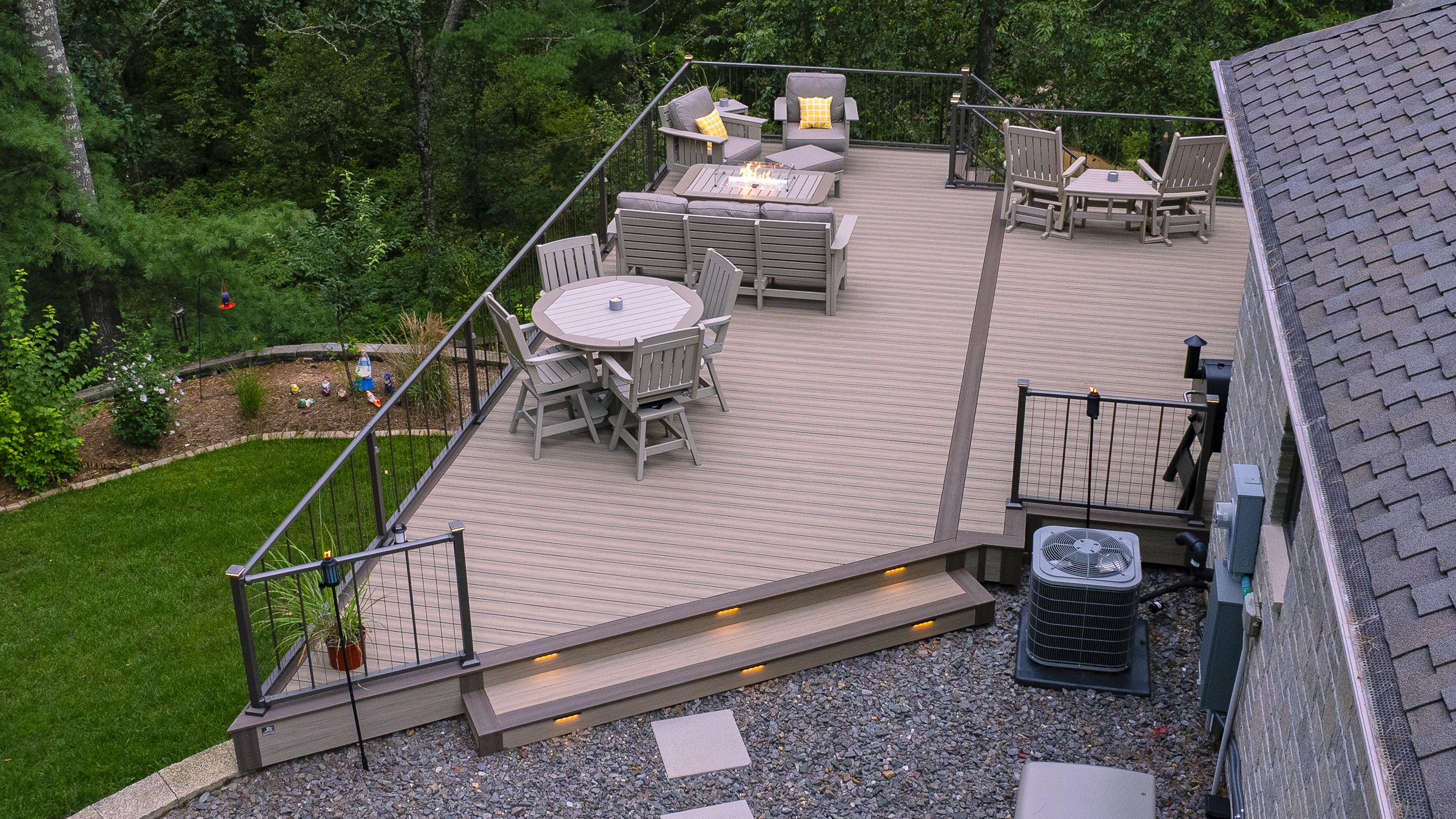
By Tory Schulz, Director of Revenue & Growth, Phillips Outdoor Services
Last updated: November 16, 2026
The Short Answer
If you want a new deck in the La Crosse area by next summer, start planning in late fall or winter. Design, material choices, permits, and scheduling can all happen while the yard is quiet. And you may not have to wait for spring to build: Phillips is still building decks into the winter months, unless Old Man Winter brings serious weather that makes the site unsafe. One big reason we can: Phillips is one of the only deck builders in the Coulee Region credentialed to install Mascore helical piers, so your deck can sit on steel piers instead of waiting on concrete footings.
Key Takeaways
- The first conversation and the first day of construction are two different dates. Planning early gives each step room to happen.
- Phillips builds decks into the winter in La Crosse, Onalaska, Holmen, West Salem, and the Coulee Region, weather permitting.
- Helical piers go in below the frost line without digging holes or waiting for concrete to cure, which is a big reason winter deck building works.
- Most new decks need a permit, and Phillips handles the entire permitting process in-house, so you don’t have to.
- Composite and wood can both work here. The structure underneath matters as much as the boards on top.
- A deck you no longer trust should be evaluated now, not “keep an eye on it” until spring.
You probably aren’t dreaming about joist spacing.
You’re picturing coffee outside before the house wakes up. Dinner with enough room for everyone. A place to sit after work that doesn’t require moving three chairs so someone can open the back door.
Maybe you already have a deck. It just comes with instructions like, “Don’t lean on that railing,” and, “We don’t step there anymore.”
Whatever the reason, you want next summer to feel different.
Then November arrives, the patio furniture disappears, and the deck idea gets filed under Things We’ll Deal With When It’s Nice Again.
Understandable. Also potentially the reason another summer slips by.
We’ve been helping families across the Coulee Region since 1975 because we believe the spaces around your home shape how you live in it. A good deck isn’t really about boards and railings. It’s about more room for the moments that matter. You don’t need to know exactly what you want yet. That’s what the conversation is for.
Why Can Waiting Until Spring Push a New Deck Into Late Summer?
Because the first conversation and the first day of construction are two different dates.
Between them, you may need a site visit, a design, a proposal, revisions, material decisions, permits, and a place in the construction schedule. A deck with a straightforward layout has different planning needs than an elevated deck with multiple stair runs and a patio below.
When you begin in spring, all of that work is still ahead of you. If your builder already has committed projects, you’re also working around that schedule. Material availability, permit review, weather, and site conditions can add time.
That doesn’t mean calling in April automatically means an August deck. It means “we’re ready to talk” and “we’re ready to build” are not the same thing.
If you have a graduation party, family reunion, or a personal commitment to finally use the grill you bought three years ago, mention it early. A clear target helps us discuss what’s realistic before expectations get ahead of the plan.
Can You Actually Build a Deck in Winter in Wisconsin?
Yes. Phillips is still building decks into the winter months. Ordinary cold isn’t a reason to stop. Old Man Winter gets a vote, not an automatic veto.
What does pause a project is serious weather: heavy snow, ice, high winds, extreme cold, or site conditions that aren’t safe for the crew. We also won’t cut corners on footings. Wisconsin’s Uniform Dwelling Code requires footings to sit below the frost line or at least 48 inches below grade, whichever is deeper, and they can’t be placed on frozen material (Wis. Admin. Code SPS 321.16). That rule is a big reason most builders park deck projects until spring. Digging 48-inch holes in frozen ground is slow, and fresh concrete can’t be allowed to freeze while it cures. Helical piers change that math, which is why we use them (more on that below). If serious weather still makes the site unsafe, we wait for a better window and keep you in the loop.
Winter building has some quiet advantages, too. Firm ground can be easier on your lawn than a muddy April, and your deck can be ready before the first warm weekend instead of after it. Whether your specific project can be built this winter depends on its scope, the site, permits, inspections, and the weather. That’s something we’ll talk through together.
Why Do We Build Decks on Helical Piers Instead of Concrete Footings?
Every deck is only as good as what’s holding it up. For decades, that meant digging a hole for every post, pouring concrete, and waiting for it to cure. It works, but it’s slow, messy, and fussy in cold weather.
Phillips is one of the only deck builders in the Coulee Region with the credentials to install Mascore helical piers. A helical pier (also called a helical pile or screw pile) is a galvanized steel shaft with helix-shaped plates near the tip. Instead of digging, we turn it into the ground with hydraulic equipment until it reaches stable soil well below the frost line. Then your deck posts attach right to it.
Here’s why that matters to you:
- It works in winter. Helical piers can be installed in any climate and carry the deck’s load as soon as they’re in. There’s no concrete to protect from freezing, so cold weather doesn’t automatically mean waiting for spring.
- Framing can start right away. There’s no cure time. Many decks can go from piers to framing the same day instead of waiting days on concrete.
- Your yard stays a yard. No holes, no piles of dirt to haul away, and far less damage to your lawn and landscaping. Portable equipment also reaches tight spots where a concrete crew would struggle.
- Every pier is measured. Installers record the torque it takes to turn each pier into the soil, and that reading is tied to how much weight it can carry. With poured concrete, the soil underneath is largely assumed.
- It resists frost heave. The helix plates anchor below the frost zone, and the narrow steel shaft gives frozen soil much less surface to grab and push upward. That’s what helps prevent the leaning, heaving deck you see a few winters later.
- It handles tough soil. Soft, wet, or uncertain soil near the river and bluffs can make concrete footings tricky. Helical piers aren’t thrown off by a high water table or caving soil, and they can be driven past those layers to firmer ground.
Concrete footings can still be a solid choice in the right conditions. But for building through a Coulee Region winter, protecting a finished landscape, or building on soil you’re not sure about, helical piers are often the better foundation. And because we’re credentialed to install them ourselves, it’s one less subcontractor and one less scheduling handoff between you and your new deck.
Sources: Mascore Helical Piles, the pier system Phillips installs; Helical Pile USA on helical piers for decks and on Wisconsin’s 48-inch footing rule and soils.
What Can Actually Get Done on a Deck Project During Winter?
Quite a bit. Your backyard may be taking the season off. Your planning doesn’t have to.
- Define how you’ll use the space. Dining, lounging, grilling, and getting into the yard all need room. Start with the people and activities, then work toward dimensions.
- Develop the layout. Consider door clearance, furniture placement, stairs, views, privacy, and how the deck meets the house and yard. Snow or inaccessible areas may require follow-up measurements.
- Compare materials and finishes. Work through decking, railing, colors, and lighting together. Choosing a board color is easier when you know what will surround it.
- Align the scope and budget. Decide what matters most and whether the whole project or a planned first phase makes sense.
- Get permits moving. We identify the correct jurisdiction, prepare the required drawings, and submit the application for you, so approval can be underway before build day.
- Discuss ordering and scheduling. Confirm lead times and what approvals, agreements, or payments are needed before materials are ordered or a build date is reserved.
A conversation alone doesn’t reserve a construction date. It does help you understand the steps needed to get there, and whether your deck could go in this winter or should be lined up for spring.
Do I Need a Permit for a Deck in La Crosse, Onalaska, Holmen, or West Salem?
Almost always, yes. A low deck, a detached deck, or a replacement in the same footprint isn’t automatically exempt. The good news: you don’t have to deal with any of it. Phillips handles the entire permitting process in-house, from figuring out which office covers your property to preparing the drawings, submitting the application, and coordinating inspections.
That matters more than it sounds. Each community runs its own process:
| Community | What the permit process involves (and what we handle for you) |
|---|---|
| City of La Crosse | A Wooden Patio Deck Permit application through the city’s construction permits office. |
| City of Onalaska | A residential deck checklist that requires a plot plan and construction details before an application can be processed. |
| Village of Holmen | Permit applications and Wisconsin deck code review through Building & Inspections. |
| Village of West Salem | A building permit application with a site plan and a deck framing plan. |
Your mailing address doesn’t always tell you which office has jurisdiction. A property with an Onalaska mailing address, for example, may not be within the City of Onalaska. Depending on the property, review can also involve setbacks, structural details, electrical work, or floodplain rules. Sorting that out is our job.
Because we start permitting during winter planning, the paperwork is moving while you’re still choosing board colors. You get to spend your time picturing the deck, not decoding a framing-plan checklist. If your neighborhood has an HOA that requires approval, we’ll handle that paperwork on your behalf too, so it can run alongside the municipal permit.
Composite or Wood: Which One Holds Up Through Coulee Region Winters?
Both can be suitable when properly selected, installed, and maintained. The better choice depends on the complete deck system, your budget, and how much upkeep you want to take on.
Wood offers a natural appearance, but it needs ongoing attention to moisture, finish condition, and signs of deterioration. The required cleaning and refinishing depend on the wood, exposure, and coating used.
Composite is worth considering when reducing that maintenance is a priority. It still needs cleaning and care, and product lines differ in composition, performance, and installation requirements. “Composite” is a category, not one identical board wearing different colors.
Composite can be installed in cold weather when it’s acclimated, gapped, and fastened to the manufacturer’s specs. Deckorators, for example, says its decking contracts only slightly in cold weather, and its mineral-based composite has the lowest thermal movement of any wood-alternative decking it knows of. It recommends letting boards sit on the job site for 48 hours before installation. Its Vista and Altitude installation guides call for a slightly wider 5/16-inch end-to-end gap when boards go down at 32°F or below. Those details are our job on site, not your homework.
Winter care matters, too. Deckorators recommends a plastic snow shovel with no metal edge, a stiff push broom, or a leaf blower for light snow. Don’t chip or scrape ice. Use a gentler ice-melt product, like one labeled safe for pets or concrete, and brush off the residue once it melts. No deck surface should be treated as slip-proof when icy.
Just as important: the boards you see are only part of the deck. Footings, framing, connections, flashing, stairs, and railings all matter. A premium surface doesn’t fix a failing structure underneath it.
Phillips is a Deckorators Certified Pro Elite builder. Deckorators gives that status each year to contractors in a market for volume, quality, growth, and partnership, and it’s the highest level of its Certified Pro program. As a Certified Pro builder, we can also offer Deckorators’ exclusive 25-year Removal & Replacement warranty on its decking and railing (some exclusions apply; we’ll walk you through the details). We can help you explore deck design and Deckorators composite decking options around the way you want to use your space. The goal is a deck you enjoy owning long after the first photograph has been taken.
What If the Deck I Have Already Feels Unsafe?
Then the first conversation should be about safety, not next summer’s furniture.
Warning signs include loose railings, sagging or shifting, soft or deteriorated wood, damaged connections, and movement where the deck meets the house. The North American Deck and Railing Association’s safety checklist highlights these areas and recommends professional evaluation.
If you suspect the deck is unsafe, stop using it and keep people away until a qualified professional evaluates it. Don’t test its strength by gathering everyone outside to see how much it moves.
Sometimes a repair may be appropriate. Sometimes the structure needs more extensive work or replacement. New boards and a fresh railing can’t answer that question on their own.
Because we’re still building into the winter, an unsafe deck doesn’t necessarily have to sit roped off until spring. An evaluation now can help you understand both the immediate concern and the right long-term plan.
How Does a New Deck Tie Into the Rest of the Yard?
Your deck should make the yard easier to enjoy. That takes more thought than choosing a rectangle and attaching stairs wherever there’s room left.
Where will those stairs land? Can someone carry dinner outside without navigating a furniture obstacle course? Will the railing preserve the view you love? Will you be able to see the steps after dark?
This is the time to think through:
- Railings: Safety, appearance, views, and how the style fits your home.
- Lighting: Steps, transitions, and comfortable evening use, with wiring considered during design.
- A patio: Space for another activity, with elevations and access planned together.
- Landscaping: Planting beds, privacy, drainage, and room for future growth.
- Winter access: Clear paths to the door and steps you actually use, including snow and ice service if you want it.
- Future additions: Shade, outdoor living features, or another phase that needs to be accounted for now.
You don’t have to build everything at once. You do want today’s project to leave room for tomorrow’s.
Planning a deck and future patio together can help avoid putting a stair landing exactly where the next phase needs to go. It can also help coordinate construction access so finished landscaping doesn’t become the route for moving materials later.
At Phillips, we look at the deck as part of your whole outdoor space. You bring the picture of how you want to live outside. We help work through how the pieces fit.
What Is the Three-Step Plan for Getting Started?
- Picture your next summer. Decide what the deck should make possible. Gather a few photos, identify your must-haves, and share any target dates. You don’t need finished drawings.
- Use the Project Estimator. Choose the deck option and general scope closest to your idea for a starting investment range. It’s a planning tool, not a final proposal.
- Talk with a Client Guide. We’ll discuss your goals, budget, property, and timing, including whether your deck could be built this winter, then determine the right next step toward a design and proposal.
You don’t have to solve the whole project before starting. You just have to tell us what you’d like life outside to look like.
What Else Do Homeowners Ask About Planning a Deck?
Can you build a deck in winter in La Crosse?
Yes. Phillips is still building decks into the winter months in La Crosse, Onalaska, Holmen, West Salem, and the surrounding Coulee Region. Phillips is one of the only deck builders in the Coulee Region credentialed to install Mascore helical piers, and those steel piers can be installed in winter below the frost line with no concrete cure time. Serious weather, such as heavy snow, ice, high winds, or extreme cold, can still pause work.
What are the benefits of helical piers over concrete deck footings?
Helical piers can be installed year-round, including in frozen ground. They carry load right away, so framing can start without waiting for concrete to cure. They need no digging, which protects your lawn and landscaping. Each pier’s installation torque is recorded to confirm its capacity, and the helix plates anchor below the frost line to resist frost heave. Phillips uses Mascore helical piers and is one of the only deck builders in the Coulee Region credentialed to install them.
Do I have to get the deck permit myself?
No. Phillips handles the entire deck permitting process in-house for La Crosse, Onalaska, Holmen, West Salem, and the surrounding Coulee Region. We determine which office covers your property, prepare the required drawings and site plans, submit the application, and coordinate inspections. If your HOA requires approval, we’ll handle that paperwork for you as well.
How far in advance should I contact a deck builder?
Allow several months for planning rather than assuming construction can begin immediately. For a deck you hope to enjoy next summer, start the conversation in late fall or winter and ask about current availability. The timeline depends on scope, decisions, permits, materials, and construction conditions.
Can I get started without knowing my exact deck size?
Yes. Begin with how you want to use the space and how many people it needs to accommodate. Approximate dimensions and photos are helpful, but the layout can be developed through the planning process.
Can I replace the boards and keep the existing framing?
Possibly, but the framing, footings, connections, and layout need evaluation first. They must be sound and suitable for the new decking system and applicable requirements. Reusing the structure should be a verified option, not an assumption made from looking at the surface.
Does starting in winter guarantee a deck by Memorial Day?
No. Early planning gives you more time to resolve decisions and discuss scheduling, but a holiday deadline needs to be reviewed against the actual project and available schedule. Share it at the first conversation.
Can we build the deck now and add a patio or landscaping later?
Yes, a phased approach may make sense. Plan the overall layout first so stairs, elevations, drainage, wiring, and access support the later work.
Is there a warranty on a Phillips Deckorators deck?
Yes. Because Phillips is a Deckorators Certified Pro Elite builder, Deckorators decking and railing we install can qualify for Deckorators’ exclusive 25-year Removal & Replacement warranty. Some exclusions apply, and we’ll go over the details for your project.
Will the Project Estimator give me a final deck price?
No. It provides a starting range. A project-specific proposal accounts for the actual design, materials, site conditions, access, removal needs, and other details. Select the scope you intend to build, and ask your Client Guide to compare alternatives or clarify the range.
Ready to Make Next Summer More Than a Someday Plan?
Next summer, you probably want to be deciding what goes on the grill, not where the stairs should go.
Starting the conversation this winter gives you time to ask questions, work through the options, and build a plan around your home and budget. And if the weather cooperates, your deck might be finished before the snow is.
Maybe that means replacing a deck you no longer trust. Maybe it means finally having room for everyone to sit down. Maybe it simply means your favorite place to unwind will be a few steps beyond the back door.
Try the Phillips Project Estimator to get a starting range. Then let’s talk about the deck, and the summer, you have in mind.
About the Author
Tory Schulz is Director of Revenue & Growth at Phillips Outdoor Services, a design-build landscaping and outdoor living company serving La Crosse, Onalaska, Holmen, West Salem, and the Coulee Region since 1975. Phillips is a Deckorators Certified Pro Elite builder and one of the only deck builders in the Coulee Region credentialed to install Mascore helical piers. It designs and builds decks, fences, patios, and landscapes, and provides landscape maintenance and snow and ice service.
Tags: